

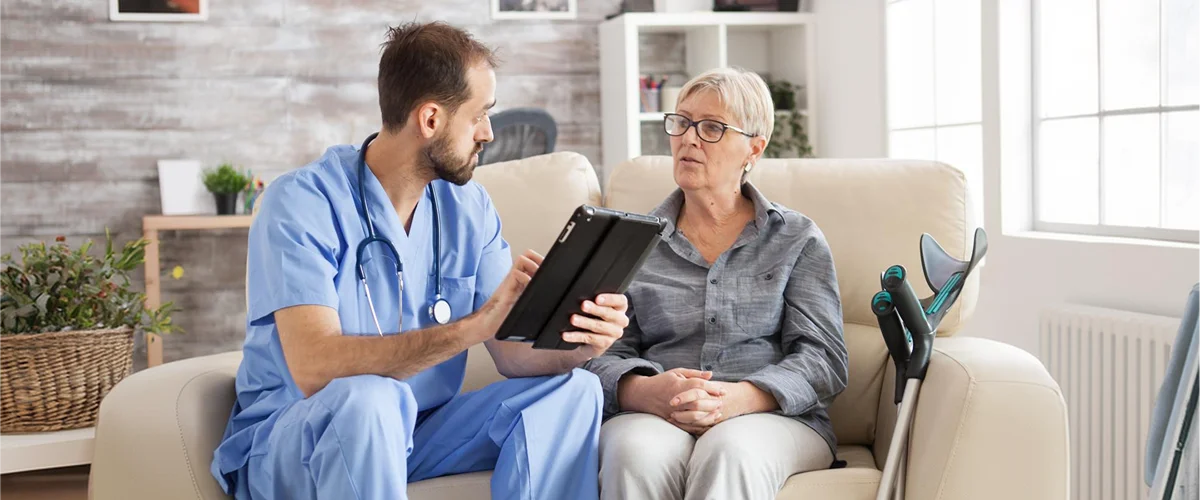

What does running a care home in England look like right now?
- Tighter CQC scrutiny, less room for gaps
- Workforce still stretched, vacancies at a decade low but still well above the wider economy
- Occupancy near 86%, homes running close to full
- Families expecting answers immediately, not next week
Busier and leaner, at the same time. That is exactly the environment where paper and spreadsheets stop being a minor inconvenience and start being a genuine operational risk.
This is not a case for care home management software because it is modern or expected. It is a case for software because the conditions homes are already operating in, tight staffing, high occupancy, rising scrutiny, leave very little room for manual processes to slip.
With Software vs Without: A Quick Comparison
The table highlights the difference between care homes with and without a dedicated software.
| Area | Without Dedicated Software | With a Care Home Management Software |
| Compliance evidence | Assembled in a scramble before each inspection | Built continuously, evidence-ready year round |
| Audit trail | Paper records, dependent on one person’s filing | Timestamped, searchable digital record |
| Admissions | Manual enquiry handling, beds sit empty longer | Automated resident journey, faster move-in |
| Staff admin time | Hours lost to forms and manual rotas | Care Home Management Software are admin handled in the background, saving more time |
| Finance and billing | Manual multi-funder reconciliation, error prone | Automated reconciliation via Xero integration |
| Visibility across shifts and sites | Fragmented, dependent on verbal handover | One real-time source of truth |
Core Challenges Care Home Faces Without Care Home Management Software
Paper Records and the Audit-trail Nightmare
When care notes, incident logs, and medication records live on paper, information sits in one filing cabinet and one person’s memory. If an inspector asks for evidence from three weeks ago, someone must physically go looking for it. Reducing paperwork in care homes is not about tidiness for its own sake, it is about being able to prove, instantly, that care was delivered as recorded. A paper trail is only as reliable as the person filing it, and that’s a fragile foundation to build CQC compliance on.
Compliance is Reactive, not Evidence-ready
Most homes only pull their compliance evidence together right before an inspection. That is a scramble, not a system. Evidence should be building itself in the background, every shift, so there is nothing to assemble in a hurry when the CQC calls. This matters most for the fundamental standards inspectors return to again and again, Regulation 12 (safe care and treatment) requires proof that risk assessments and care plans are current, not just completed once, and Regulation 15 (premises and equipment) requires up to date records of things like fire safety and equipment maintenance certificates. Paper makes it harder to provide evidence on demand than it needs to be.
Staff Time Lost to Admin Instead of Resident Care
Every form filled out by hand, every rota built manually, is time a carer or manager is not spending with residents. With vacancies still running high across the sector, that lost time is the one resource homes genuinely cannot afford to waste.
Slow Admissions Mean Empty Beds and Lost Revenue
A paper-based enquiry process, chasing forms and waiting for call-backs, means a bed can sit empty for days longer than it needs to. Every day an admissible bed stays empty is direct revenue a home will never recover, and families weighing up several homes often choose whichever one responds and confirms first.
Multi-funder Billing and Manual Reconciliation Errors
Reconciling resident fees across local authorities, the NHS, and self-funders by hand is where billing mistakes happen. A missed credit notes or a duplicated invoice does not just cost money, it costs trust with families and funders who expect clean, timely statements. But usage of invoicing software, can help care homes to avoid these types of situations.
No Single Source of Truth Across Shifts, Teams, or Sites
A verbal handover or a scribbled note carries far less than a timestamped, logged update. Small changes in a resident’s condition can quietly fall through the cracks between one shift and the next, and for multi-site operators, the same gap repeats itself across every home with no easy way to compare them.
What This Actually Costs You
None of this shows up as one dramatic failure. It shows up as a slower response during an inspection, a manager doing finance reconciliation on a Sunday evening, or a bed sitting empty for an extra week while an enquiry goes unanswered. Individually, each of these is manageable. Together, they compound, and the gap between homes running manually and homes running on a proper system widens every year as regulatory scrutiny increases and the workforce stays hard to staff.
We are not going to invent a precise pounds-and-pence figure here, because no sourced data exists to support one. What can be said with confidence, based on the verified sector data above, is directional: a workforce running at a decade-low vacancy rate is still stretched roughly three times thinner than the wider economy, and homes are operating close to full capacity. That combination leaves far less slack to absorb inefficiency than at almost any point in recent years. Every hour spent re-entering data by hand, every delayed admission, every finance error caught late, is time and money a home is far less able to spare right now than it once was.
How Zeltri Solves These Problems
Zeltri was built around the specific pressures above, not a generic checklist of features.
- Ara, Zeltri’s AI assistant: Reads a home’s inbox and raises tasks automatically, so requests and follow-ups do not sit unread while admin piles up.
- Compliance tracking: Keeps certificates, training records, and care plan reviews evidence-ready between inspections, not reconstructed in the week before one, supporting evidence for standards like Regulation 12 and Regulation 15 rather than leaving it to memory.
- Admissions and resident journey automation: Move enquiries through to move-in faster, cutting the gap that currently leaves beds empty and revenue on the table.
- Finance tools with Xero integration: Handle multi-funder reconciliation, local authority, NHS, and self-funder billing, without manual cross-checking line by line.
- Voice-recorded pre-assessments: Auto-populate admission forms, removing a manual step at the exact point new residents are joining the home.
Together, this replaces six disconnected habits with one connected system, built to give managers their time back rather than adding another dashboard to check.
Bringing Your Care Home into the Present
In December 2021, around 41% of registered adult social care providers used digital social care records. By July 2025, that had risen to close to 80%, according to government figures.
But electronic care plans do not mean the whole operation is digital. A home can run software for care notes while still handling enquiries on spreadsheets, admissions on paper, complaints by email, and compliance reminders manually. Digitising care notes was never the finish line.
If you want to see what evidence-ready compliance and faster admissions actually look like day to day, book a walkthrough with the Zeltri team. There is no obligation, just a clear look at what a day without the admin could feel like.
FAQs
Q. Do small care homes really need software?
A. Size is not the deciding factor. A single home still has to evidence CQC compliance, manage admissions, and reconcile fees, often with a smaller back-office team to absorb the extra admin than a larger group has.
Q. How long does it take to switch from paper to software?
A. It is typically a phased transition, compliance and resident records first, then admissions and finance workflows, rather than an overnight switch that disrupts care.
Q. What software is used in care homes?
A. Care homes typically use care home management software covering care planning, medication records, staff rostering, compliance tracking, and billing, replacing paper files with one connected, auditable system.
Q. What are the advantages of in-house software?
A. Dedicated care software centralises records, keeps compliance evidence-ready year-round, speeds up admissions, reduces billing errors, and cuts admin time, giving managers one accurate, real-time view across the home.
Q. What are the digital technology in care homes?
A. Common digital technology in care homes includes care management software, electronic medication records, telecare and fall detection sensors, digital rostering tools, and AI assistants that automate compliance and admin tasks.